Buy highshop.net ?
We are moving the project
highshop.net .
Are you interested in purchasing the domain
highshop.net ?
domain@kv-gmbh.de · 0541-91531010
Buy highshop.net ?
How are high-voltage cables distributed?
High-voltage cables are distributed through a network of transmission lines and substations. The transmission lines carry the electricity over long distances from power plants to substations, where the voltage is then stepped down for distribution to homes and businesses. The cables are typically installed on tall transmission towers or underground to minimize interference and maximize efficiency. The distribution network is carefully planned and maintained to ensure reliable and safe delivery of electricity to consumers. **
Where can I buy cardboard with the dimensions 1m x 1m?
You can buy cardboard with the dimensions 1m x 1m at various places such as office supply stores, craft stores, packaging supply stores, and online retailers. Look for specialty stores that sell large sheets of cardboard or contact local packaging companies to inquire about purchasing cardboard sheets in the specific size you need. Additionally, you can check with local hardware stores or home improvement centers as they may carry large sheets of cardboard for various purposes. **

Similar search terms for Cables-Direct-1m-High
Top-Angebote
Products related to Cables-Direct-1m-High:
-
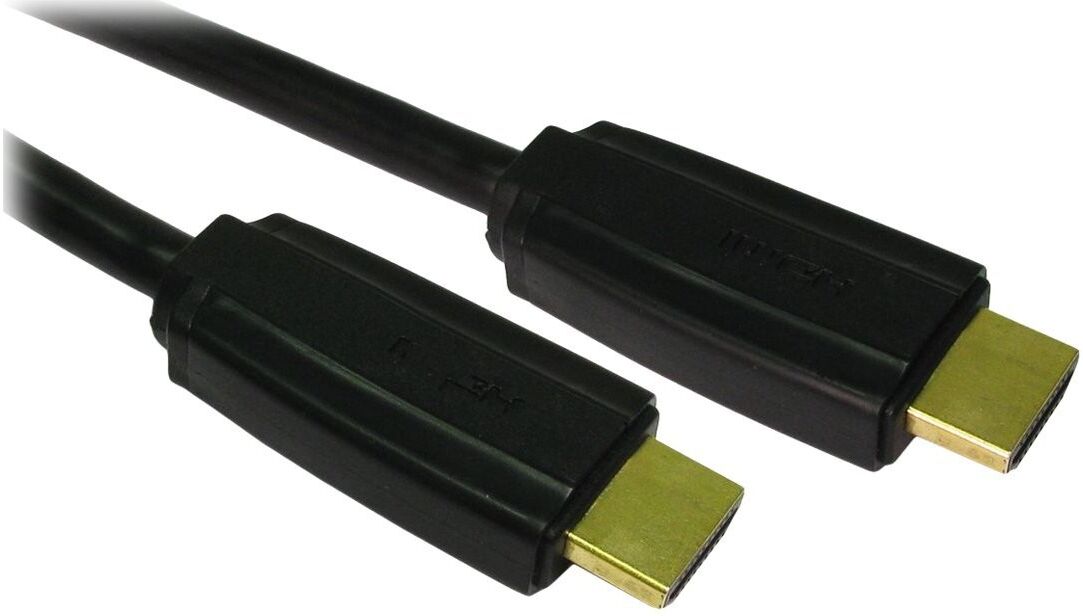
Cables Direct Flat HDMI 1.4 High Speed with Ethernet Cable - 1mHDMI, a digital interface, merges video and audio for devices like DVD players, DTV players, and set-top boxes. It supports standard to high-definition video and standard to multi-channel surround-sound audio.12,99 £*Shipping: 0,00 £Secure redirect to the provider
-
Cables Direct Ultra High Speed 8K HDMI 2.1 Cable 1m - CopperOverview The CDLHD8K range of 8K HDMI Cables are designed to support up to 8K specification. This cable ensures high-bandwidth dependent features are delivered including uncompressed 8K video. For the gamer 4K at 120Hz resolutions can be achieved providing smooth motion. It features exceptionally low EMI (electro-magnetic interference) which reduces interference with nearby wireless devices. The cable is backwards compatible and can be used with the existing installed base of HDMI devices. It is also backwards compatible with earlier versions of the HDMI Specification and can be used with existing HDMI devices. Key Features 8K Support Auto Low Latency Mode (ALLM) Enhanced Audio Return Channel (eARC) Quick Frame Transport (QFT) Quick Media Switching (QMS) Variable Refresh Rate (VRR) Backwards compatible with earlier versions HDMI Ethernet Channel Technical Specifications Supports 48Gbps bandwidth Lengths 0.5m-3m 28AWG (5m 26AWG) Aluminium hood Gold connectors Black cable braiding11,99 £*Shipping: 0,00 £Secure redirect to the provider
-
Cables Direct HDMI Ethernet Cable 1mHigh-speed HDMI cable with integrated Ethernet channel (HEC) supporting 3D transmission over 1 meter length. Gold-plated connectors and drain wire provide enhanced signal quality and durability for connecting compatible audio/video devices.11,99 £*Shipping: 0,00 £Secure redirect to the provider


-
Can the direct current cross-section be distributed across multiple cables?
Yes, direct current can be distributed across multiple cables. By connecting multiple cables in parallel, the total current can be divided among the cables, allowing for the distribution of the direct current across them. This method is commonly used in electrical systems to ensure that the current is evenly distributed and to prevent overloading of individual cables. **
-
How do I determine the polarity of cables in direct current?
To determine the polarity of cables in direct current, you can use a multimeter set to the DC voltage setting. Connect the red probe to the positive terminal of the cable and the black probe to the negative terminal. If the multimeter shows a positive reading, then the red probe is connected to the positive terminal. If the reading is negative, then the red probe is connected to the negative terminal. This method helps you identify the polarity of the cables accurately. **
-
Can high-voltage direct current be converted into low-voltage direct current?
Yes, high-voltage direct current (HVDC) can be converted into low-voltage direct current (LVDC) using a device called a voltage converter or transformer. These devices can step down the voltage level of the DC power to a lower level suitable for specific applications. This conversion process is commonly used in various industries and applications where different voltage levels are required for different devices or systems. **
-
Why are high voltage cables so thin?
High voltage cables are thin because the high voltage they carry creates a strong electric field around the cable. Thinner cables reduce the amount of insulation needed to contain the electric field, making them more efficient and cost-effective. Additionally, thinner cables are lighter and easier to handle, making installation and maintenance easier. Finally, thinner cables also reduce the amount of material needed, making them more environmentally friendly. **


How can high-voltage cables be secured?
High-voltage cables can be secured using a variety of methods. One common way is to use cable clamps or brackets to fasten the cables to a structure such as a pole or a wall. Additionally, cable trays or cable ladders can be used to support and secure the cables along their route. It is important to ensure that the cables are properly supported and insulated to prevent any damage or safety hazards. Finally, regular inspections and maintenance should be conducted to ensure that the cables remain secure and in good condition. **
Do you need thicker cables for direct current than for alternating current?
No, you do not necessarily need thicker cables for direct current (DC) than for alternating current (AC). The current-carrying capacity of a cable is determined by factors such as the material, size, and insulation of the cable, as well as the voltage and current being carried. Both DC and AC have their own unique considerations when it comes to cable sizing, but the need for thicker cables is not inherently tied to the type of current being carried. It ultimately depends on the specific requirements of the electrical system and the application. **
Top-Angebote
Products related to Cables-Direct-1m-High:
-
Cables Direct HDMI 1.4 High Speed with Ethernet Cable - 1mFeatures Length 1 meter High speed with ethernet Supports HDMI 1.4, HDMI 1.4a and HDMI 2.0 equipment functions Full copper cable Backwards compatible with older HDMI versions. Supports 3D over HDMI Supports 4K x 2K Resolution Audio return channel HDMI Ethernet channel Gold contacts Colour black10,99 £*Shipping: 0,00 £Secure redirect to the provider
-
Cables Direct Flat HDMI 1.4 High Speed with Ethernet Cable - 1mHDMI, a digital interface, merges video and audio for devices like DVD players, DTV players, and set-top boxes. It supports standard to high-definition video and standard to multi-channel surround-sound audio.12,99 £*Shipping: 0,00 £Secure redirect to the provider
-
Cables Direct Ultra High Speed 8K HDMI 2.1 Cable 1m - CopperOverview The CDLHD8K range of 8K HDMI Cables are designed to support up to 8K specification. This cable ensures high-bandwidth dependent features are delivered including uncompressed 8K video. For the gamer 4K at 120Hz resolutions can be achieved providing smooth motion. It features exceptionally low EMI (electro-magnetic interference) which reduces interference with nearby wireless devices. The cable is backwards compatible and can be used with the existing installed base of HDMI devices. It is also backwards compatible with earlier versions of the HDMI Specification and can be used with existing HDMI devices. Key Features 8K Support Auto Low Latency Mode (ALLM) Enhanced Audio Return Channel (eARC) Quick Frame Transport (QFT) Quick Media Switching (QMS) Variable Refresh Rate (VRR) Backwards compatible with earlier versions HDMI Ethernet Channel Technical Specifications Supports 48Gbps bandwidth Lengths 0.5m-3m 28AWG (5m 26AWG) Aluminium hood Gold connectors Black cable braiding11,99 £*Shipping: 0,00 £Secure redirect to the provider
-
How are high-voltage cables distributed?
High-voltage cables are distributed through a network of transmission lines and substations. The transmission lines carry the electricity over long distances from power plants to substations, where the voltage is then stepped down for distribution to homes and businesses. The cables are typically installed on tall transmission towers or underground to minimize interference and maximize efficiency. The distribution network is carefully planned and maintained to ensure reliable and safe delivery of electricity to consumers. **
-
Where can I buy cardboard with the dimensions 1m x 1m?
You can buy cardboard with the dimensions 1m x 1m at various places such as office supply stores, craft stores, packaging supply stores, and online retailers. Look for specialty stores that sell large sheets of cardboard or contact local packaging companies to inquire about purchasing cardboard sheets in the specific size you need. Additionally, you can check with local hardware stores or home improvement centers as they may carry large sheets of cardboard for various purposes. **
-
Can the direct current cross-section be distributed across multiple cables?
Yes, direct current can be distributed across multiple cables. By connecting multiple cables in parallel, the total current can be divided among the cables, allowing for the distribution of the direct current across them. This method is commonly used in electrical systems to ensure that the current is evenly distributed and to prevent overloading of individual cables. **
-
How do I determine the polarity of cables in direct current?
To determine the polarity of cables in direct current, you can use a multimeter set to the DC voltage setting. Connect the red probe to the positive terminal of the cable and the black probe to the negative terminal. If the multimeter shows a positive reading, then the red probe is connected to the positive terminal. If the reading is negative, then the red probe is connected to the negative terminal. This method helps you identify the polarity of the cables accurately. **
Similar search terms for Cables-Direct-1m-High
-
Cables Direct HDMI Ethernet Cable 1mHigh-speed HDMI cable with integrated Ethernet channel (HEC) supporting 3D transmission over 1 meter length. Gold-plated connectors and drain wire provide enhanced signal quality and durability for connecting compatible audio/video devices.11,99 £*Shipping: 0,00 £Secure redirect to the provider
-
Cables Direct Super Slim High Speed 4K HDMI Cable with Ethernet - 1mA 1 metre super slim High Speed HDMI cable from Cables Direct with standard HDMI Type A male connectors at both ends. The thin, flexible cable suits tight spaces behind TVs, monitors and games consoles, and supports 4K x 2K resolution and 3D.12,99 £*Shipping: 0,00 £Secure redirect to the provider
-
Can high-voltage direct current be converted into low-voltage direct current?
Yes, high-voltage direct current (HVDC) can be converted into low-voltage direct current (LVDC) using a device called a voltage converter or transformer. These devices can step down the voltage level of the DC power to a lower level suitable for specific applications. This conversion process is commonly used in various industries and applications where different voltage levels are required for different devices or systems. **
-
Why are high voltage cables so thin?
High voltage cables are thin because the high voltage they carry creates a strong electric field around the cable. Thinner cables reduce the amount of insulation needed to contain the electric field, making them more efficient and cost-effective. Additionally, thinner cables are lighter and easier to handle, making installation and maintenance easier. Finally, thinner cables also reduce the amount of material needed, making them more environmentally friendly. **
-
How can high-voltage cables be secured?
High-voltage cables can be secured using a variety of methods. One common way is to use cable clamps or brackets to fasten the cables to a structure such as a pole or a wall. Additionally, cable trays or cable ladders can be used to support and secure the cables along their route. It is important to ensure that the cables are properly supported and insulated to prevent any damage or safety hazards. Finally, regular inspections and maintenance should be conducted to ensure that the cables remain secure and in good condition. **
-
Do you need thicker cables for direct current than for alternating current?
No, you do not necessarily need thicker cables for direct current (DC) than for alternating current (AC). The current-carrying capacity of a cable is determined by factors such as the material, size, and insulation of the cable, as well as the voltage and current being carried. Both DC and AC have their own unique considerations when it comes to cable sizing, but the need for thicker cables is not inherently tied to the type of current being carried. It ultimately depends on the specific requirements of the electrical system and the application. **
* All prices are inclusive of VAT and, if applicable, plus shipping costs. The offer information is based on the details provided by the respective shop and is updated through automated processes. Real-time updates do not occur, so deviations can occur in individual cases. ** Note: Parts of this content were created by AI.